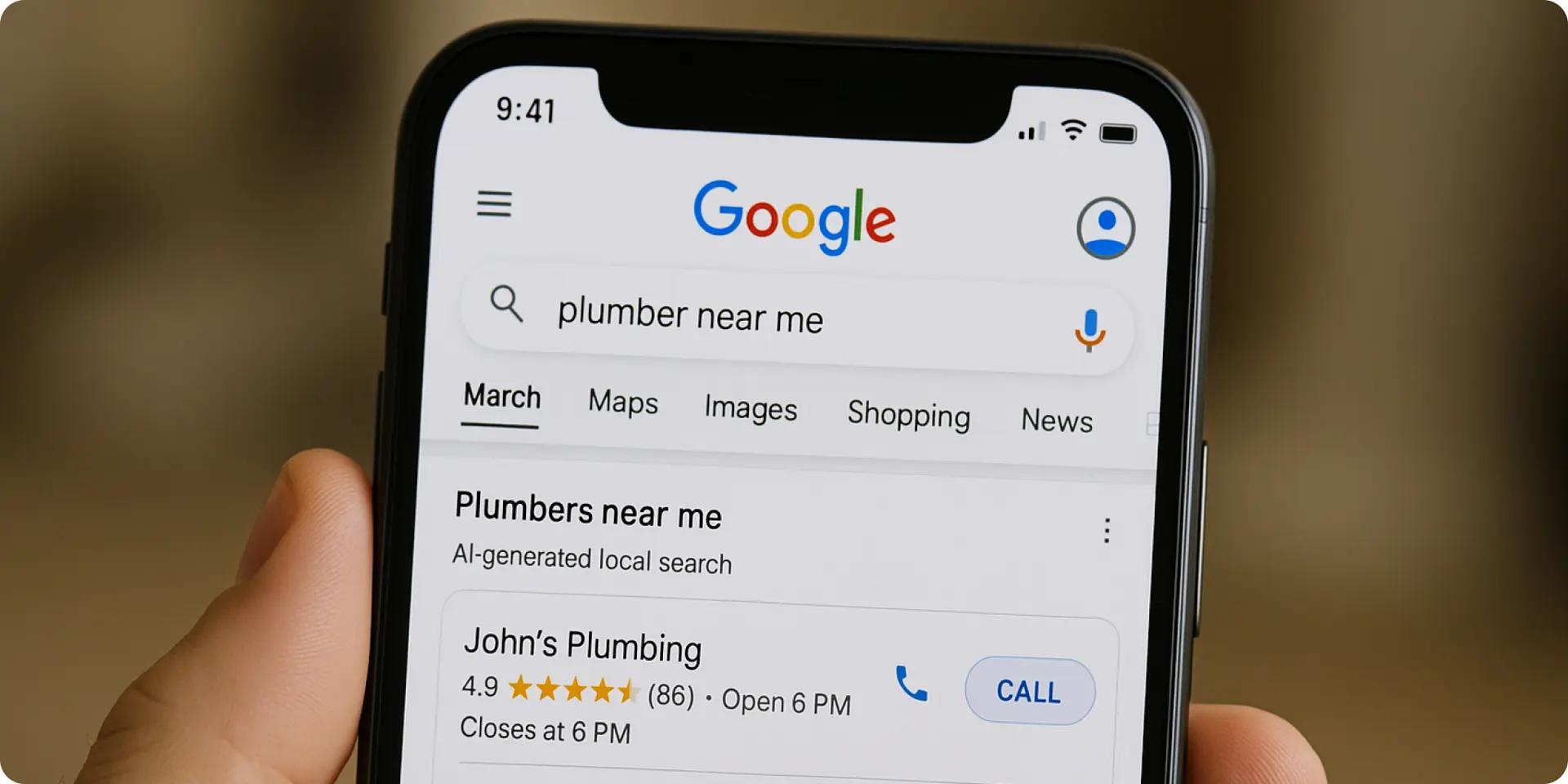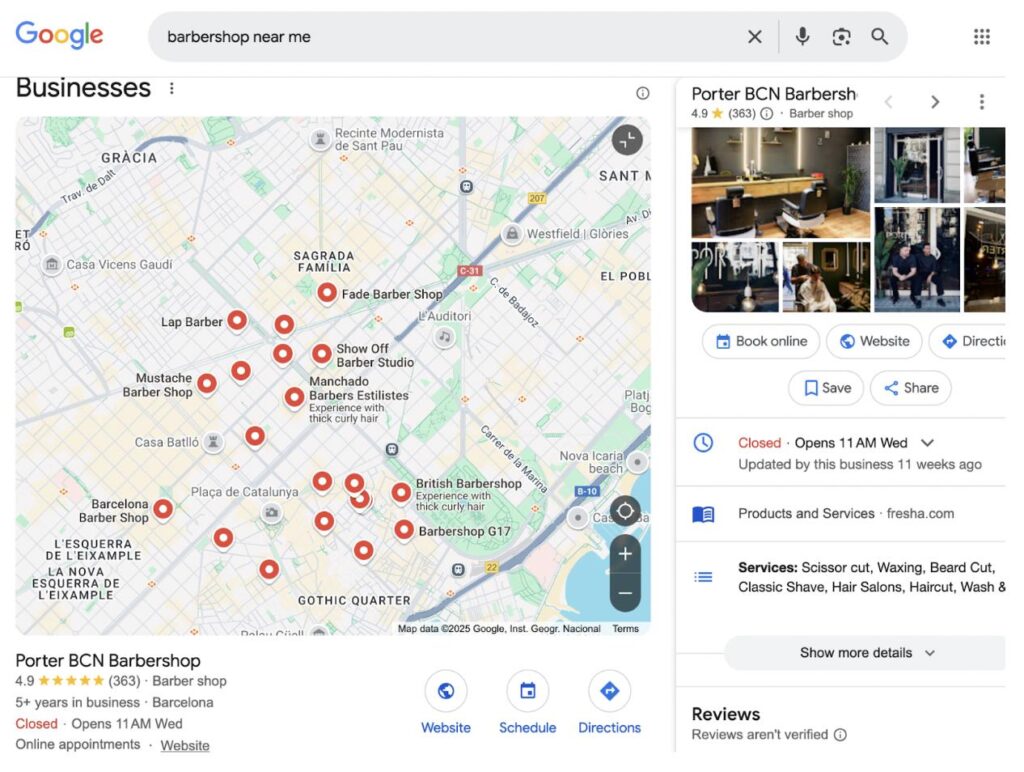
Online reputation management sounds like something only big brands pay for. For a small business it is simpler and more important than that. Before a customer rings you, they usually type your name into Google. What they see in the next ten seconds, your reviews, your Google Business Profile, your website and anything else that appears, decides whether they call you or the next firm on the list. Managing that first impression is what online reputation management means at small business scale.
What online reputation management covers
For a local firm it comes down to four things:
- What appears when someone searches your business name. Your website, your Google Business Profile, directory listings, social profiles and any press or forum mentions.
- Your reviews. How many, how recent, what they say and how you reply.
- Consistency. Your name, address, phone number and opening hours should match everywhere they appear.
- Response. How quickly and calmly you deal with complaints in public.
Step one: search yourself like a customer would
Open a private browser window and search your business name, then your name plus your town, then your name plus “reviews”. Note what appears on the first page. Common findings:
- An old listing with a previous address or phone number.
- A directory profile you forgot you created.
- A negative review from two years ago with no reply.
- Social media accounts that have not been updated since they were set up.
Fix the easy things first: update or claim old listings, and delete accounts you no longer use.
Step two: get your Google Business Profile right
For most local firms, the profile is the most visible part of their reputation. It shows your star rating, recent reviews and photos before anyone reaches your website. Make sure the details are correct and the photos show real work. Our guide to Google Business Profiles for trades walks through the setup.
Step three: build a steady flow of genuine reviews
The best protection against one bad review is a steady stream of good ones. Ask every satisfied customer, at the moment the job is finished, and send a direct link so it takes them a minute. Our post on how to get more Google reviews has a simple routine.
Online reputation management and the law on reviews
Since April 2025, UK consumer law has been much stricter about reviews. GOV.UK’s guidance on reviews and endorsements explains that fake reviews and concealed incentivised reviews are now banned practices, and the Competition and Markets Authority can fine businesses directly. In practice that means:
- Never write reviews for your own business, or ask friends and family to pose as customers.
- Never pay for reviews, or offer a discount or gift in exchange for one, without making that clear.
- Never post fake negative reviews about a competitor.
- Be careful with anyone selling “review packages”. If they cannot explain where the reviews come from, walk away.
Any agency that offers to make your reviews look better through tricks is putting your business at risk, not protecting it.
How to reply to a negative review
A calm, specific reply often does more for your reputation than the review itself does damage, because future customers read both.
- Reply within a day or two, once you have the facts.
- Thank them, acknowledge the problem and keep it short.
- Do not argue in public or share private details about the job.
- Offer a way to resolve it offline, with a name and a phone number.
- If you put it right, say so in a follow up reply.
If a review breaks Google’s own content rules, for example it is spam, offensive or clearly not from a customer, you can report it. Our guide on how to remove a Google review explains when that is possible and when it is not.
Reputation in Luton, Dunstable and Bedford
In towns the size of Luton, Dunstable, Houghton Regis, Leighton Buzzard and Bedford, a lot of work still comes from people asking neighbours and local Facebook groups for a name. The first thing they do with that name is search it. Your reputation online is what confirms, or undoes, the word of mouth that sent them to you.
ST HECS, a staffing and cleaning company in Luton, shows what a strong local reputation looks like in practice. It has 30 five-star Google reviews, shows real photos from its own jobs on its website rather than stock images, and explains how its staff are DBS-checked. For a business that sends people into homes, care settings and schools, that last point answers the first question many customers have before they have to ask it.
The lesson for any local firm is that reputation is not only reviews. It is real photos, plain answers to the worries your customers have, and details that match everywhere. Our Luton and Bedford trade website study looked at how local firms present this on their sites.
Keep your details consistent
Customers lose trust quickly when a phone number on one site does not work or an address is out of date. Keep a single list of your official business details and use it every time you create or update a listing.
A monthly reputation routine
- Search your business name and note anything new.
- Reply to every new review.
- Check your Google Business Profile details and add new photos.
- Ask your last month’s customers for reviews if you have not already.
- Check one or two directory listings for accuracy.
Half an hour a month is usually enough for a small firm.
Want help managing your reputation?
Ivy Hive offers reputation and review management alongside local SEO for small firms. If you would like us to look at what customers see when they search your business, contact Ivy Hive and we will tell you what to fix first.