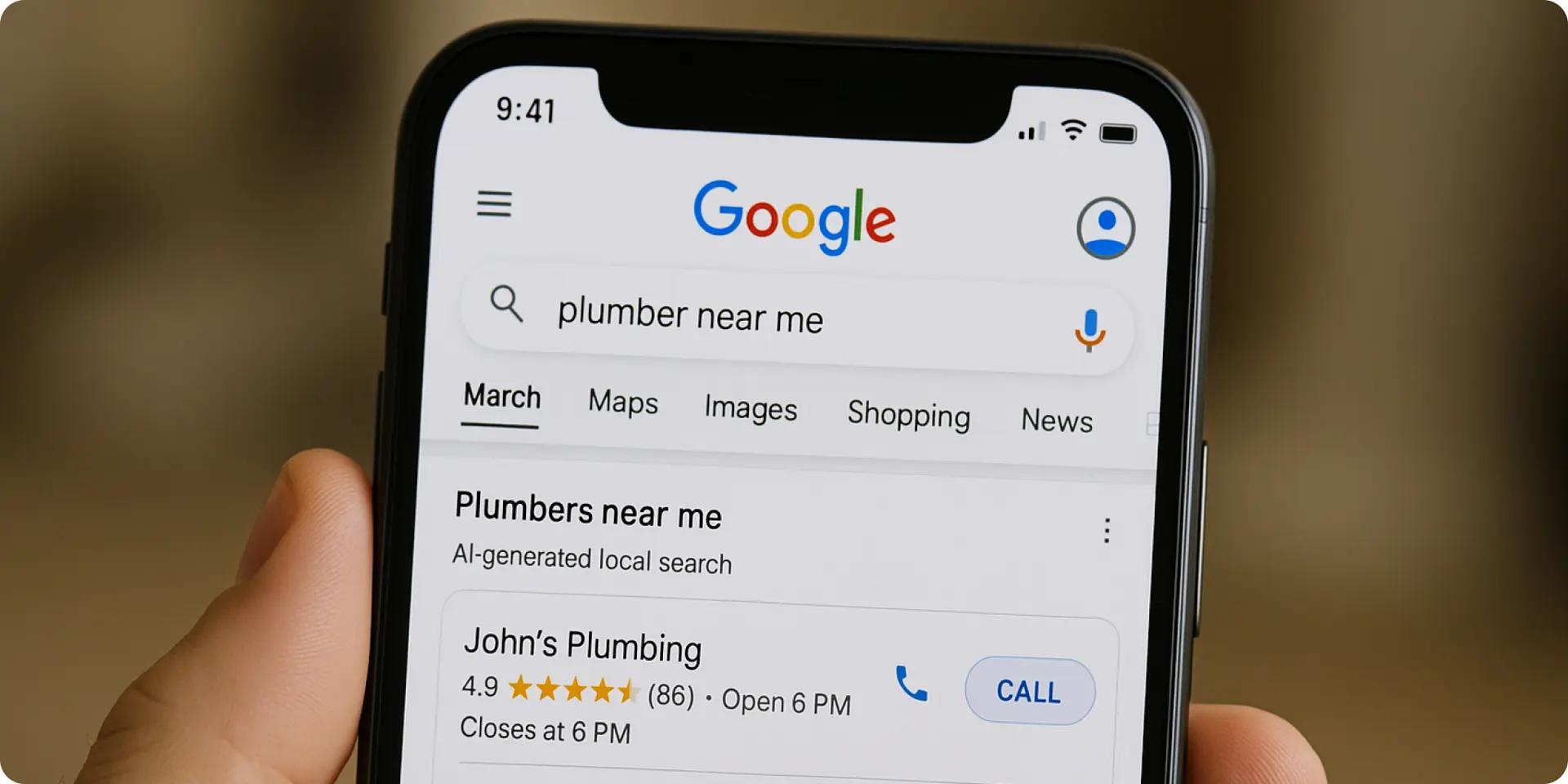
If you have just registered a company or gone self-employed and want to start the new year taking bookings, one of the first questions is what pages does a small business website need. The answer is fewer than most people expect. A new business does not need twenty pages and a blog on day one. It needs a small set of pages that tell a customer what you do, where you do it, why they can trust you and how to get in touch.
This checklist is written for new directors and sole traders in Luton, Bedfordshire and Hertfordshire planning a launch for January, but it applies to most service businesses anywhere in the UK.
What pages does a small business website need at launch?
For most new service businesses, these are the core pages:
- Home page. One clear sentence saying what you do and where, a phone number visible without scrolling, and links to your main services.
- A page for each main service. If you offer three distinct services, give each its own page. A single “Services” page listing everything in bullet points gives Google and customers very little to go on.
- About page. Who runs the business, how long you have done this work and anything that sets you apart. Use your real name and a real photo if you can.
- Contact page. Phone, email, the towns you cover, your opening hours and a short enquiry form.
- Reviews. Real reviews only. If you have none yet, leave this out until you do rather than filling it with placeholders.
- Privacy policy. If your contact form collects names, emails or phone numbers, you need to tell people what you do with that information.
That is six pages, and it is enough to launch. You can add more once enquiries start and you learn what customers ask about.
What goes on a service page
Service pages do most of the work, because they are the pages people land on when they search for something specific. A useful service page answers the questions a customer would ask on the phone:
- What the service includes, and what it does not
- Roughly what it costs, or what affects the price
- How long it takes and how soon you can start
- Which towns you cover
- Photos of your own work where possible
- A clear next step: call, message or request a quote
Write in the words your customers use. A customer searches for “end of tenancy cleaning”, not “property turnover solutions”.
Details a limited company must show on its website
If you trade as a limited company, the law sets out details your website must display. Under the Company, Limited Liability Partnership and Business (Names and Trading Disclosures) Regulations 2015, a company must show on its website its registered name, the part of the UK it is registered in (for example England and Wales), its registered number and its registered office address.
Most businesses put these in the website footer so they appear on every page. Our guide to website legal requirements in the UK covers privacy notices and cookies in more detail.
Pages you can leave until later
Some pages are useful but not essential on day one:
- Blog. Worth starting once you have time to post regularly. An empty blog with one post from launch week looks worse than no blog.
- FAQ page. Better written after a few months, using questions customers actually ask.
- Project gallery or case studies. Add these as you complete jobs and collect photos.
- Town or area pages. Useful if you travel to customers, but each one needs real local detail. Copying the same text and swapping the town name does not help anyone.
How this applies to new businesses in Luton, Dunstable and Bedford
Many new service businesses in Luton, Dunstable, Bedford, Leighton Buzzard and Hitchin travel to customers across several towns rather than working from a shop. For them, the contact page and service pages should name the towns covered, and area pages are worth adding once the core pages are done.
Two local examples show how this grows over time. PrimeGuard Removals in Dunstable has town pages for the areas it covers and shows its Google reviews on its site, with a QR code customers can scan to leave a review. ST HECS in Luton shows real job photos on its site and explains how its staff are DBS-checked, which answers a question customers would otherwise have to ask.
The legal basics are often missed, even by established firms. In our study of Luton and Bedford trade websites, we checked the homepages of 118 readable sites. Of the 51 that said they were a limited company, 25 showed no company number, and 51 of the 118 had no privacy link at all. A new business can get these right from the first day.
Timing a January launch
If you want to be taking enquiries in January, start gathering what the website needs now: your logo if you have one, a list of services, the towns you cover, any photos of your work and your company details. December fills up quickly, so leaving it until after Christmas usually means launching in February instead.
Our New Business Launch website is built for exactly this stage. It costs £497 fixed with no contract, goes live in 7 days, and we write the words for you. Hosting, your domain and a business email are included for the first 12 months, and the care plan is £29 a month from month 13. You own the website and the domain. New businesses also get their Google Business Profile set up free. If you are still setting up email, see our guide on how to get a business email.
Planning a January launch? Get in touch with Ivy Hive and tell us what your business does. We will tell you which pages you need and what we need from you to get started.