SEO for builders is different from SEO for most trades. A plumber wants the phone to ring today. A builder wants the right enquiry: an extension, a loft conversion or a full renovation, from a homeowner who is ready to plan the work and has a realistic budget. Good search engine optimisation helps you attract those people and put off the ones you do not want. This guide covers what homeowners type into Google, the pages your website needs and how to turn the work you already do into content that ranks.
How homeowners search for a builder
Most people do not search for “builder” and stop there. They search for the job: “single storey extension”, “loft conversion cost”, “knock through kitchen wall” or “builders near me”. Many start months before they hire anyone, reading about planning permission, building regulations and rough costs. That gives a building firm two chances to be found: when someone is researching, and when someone is ready to ask for quotes.
A website with one services page listing everything you do will struggle with both. Google needs a clear page to match to each search, and homeowners want to see that you have done their kind of job before.
The pages a builder’s website needs
Start with a page for each type of work you want more of. For most local builders that means separate pages such as:
- House extensions, split into single storey and double storey if you do plenty of both
- Loft conversions
- Garage conversions
- Kitchen and internal renovations, including knocking through walls
- Any specialist work you are known for, such as period property repairs or new builds
Each page should explain the job in your own words: how you usually run it, what the homeowner needs to sort out first, who handles drawings and approvals, and how long the work tends to take on site. Add photos of your own projects and a clear way to ask for a quote. Avoid copying the same text across pages with only the job name swapped. Near identical pages add little for Google or for homeowners.
Turn finished projects into pages
Your best SEO asset is the work you have already finished. A short project page for each job, with before, during and after photos, the town it was in and a few lines on what the client wanted, does several things at once. It shows Google that you work in that area, gives homeowners proof of quality and creates pages that can rank for searches such as “loft conversion in Dunstable”.
Only publish what is real. Use your own photos, get the client’s permission and do not show anything that identifies their home if they would rather you did not.
Local SEO for builders
When someone searches “builders near me”, Google usually shows a map with a few local businesses above the normal results. Getting into that map is mainly about your Google Business Profile. Google says local results depend on relevance, distance and prominence, and prominence includes reviews and links from other websites.
The basics matter most:
- Choose the most accurate primary category and add the services you offer.
- Set your service area to the towns you want to work in.
- Add project photos regularly.
- Ask every happy client for a Google review and reply to each one.
Our guide to Google Business Profile for trades goes step by step through the setup, and we cover review requests in detail in how to get more Google reviews.
Content that answers real homeowner questions
Homeowners researching a project ask the same questions again and again on forums and in your first site visit. Do I need planning permission for a rear extension? Who arranges building control? Can we live in the house during the work? How do stage payments work? Each of these can be a helpful article on your site, written from your experience on real jobs.
Be careful with facts about regulations. Link to official sources such as the Planning Portal or your local council for the rules, and stick to explaining how you handle them in practice. One accurate, useful article a month will do more than a pile of thin ones.
Trust signals that help you rank and convert
Builders are a high value, high trust purchase, so homeowners look closely before they call. Make the following easy to find:
- Your full business name, address and phone number, the same everywhere online
- Your company details if you trade as a limited company
- Insurance and any trade body memberships you actually hold, with links to verify them
- Real reviews and project photos
Our study of Luton and Bedford trade websites found that about half of the local trade websites saying Ltd showed no company number. Putting yours on clearly is an easy fix that sets you apart.
How long SEO takes for a builder
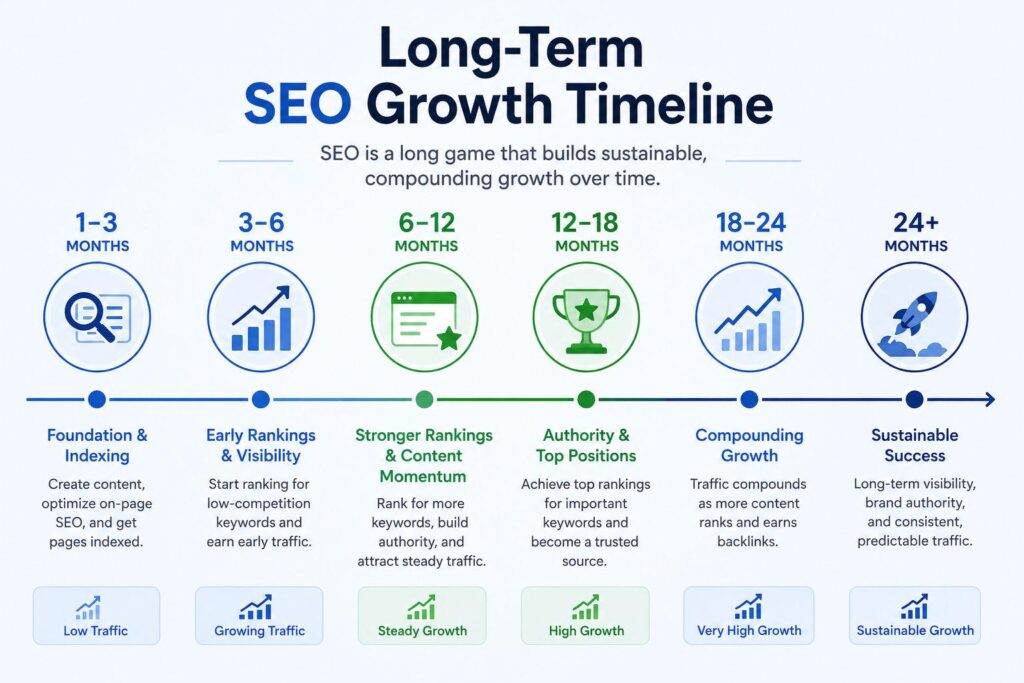
Expect months, not weeks. A new website in a competitive area can take a long time to rank for the main job searches, though project pages and your Google Business Profile often start bringing enquiries sooner. Our article on how long SEO takes explains what affects the timeline and what you should see along the way.
SEO for builders in Luton, Bedfordshire and Hertfordshire
Builders around Luton usually work a patch: Luton, Dunstable, Houghton Regis, Harpenden and the villages in between, sometimes out to St Albans or Leighton Buzzard. The searches that bring in work follow the same pattern, a service plus a town, such as extensions in Harpenden or loft conversions in Luton. A single generic homepage cannot rank for all of those.
The approach that has worked for local trades we support is one strong page per main service, then separate pages for the towns you really cover, each with your own job photos from that area.
PaveLocal, our driveway site, follows the same structure: separate pages for Milton Keynes, Luton, Dunstable, Bedford, Leighton Buzzard, Northampton and other nearby towns, plus cost guides that break a quote down into excavation, sub-base, edging and drainage.
Getting help with SEO for your building firm
Ivy Hive builds and runs SEO for trades across Luton, Bedfordshire and nearby areas. We can plan your service and project pages, set up your Google Business Profile and report each month on what is bringing enquiries in. If you want to see where your building firm stands now, contact us and we will take a look.